Block Jam: 3D Color Puzzle
- 4.5
- Rating
- 10.00M
- Installs
- Free
- Price

 Analysis by App-foxy
I started playing Block Jam: 3D Color Puzzle expecting a quick color-matching distraction, and that is exactly where it fits best. It is a free puzzle game from VOODOO built around arranging colorful blocks and guiding cute block characters through compact challenges. The idea is easy to understand within moments, but the later decisions ask for more care than the cheerful presentation first suggests.
That combination makes it a useful game to judge by habit rather than by its store summary alone. Do you want something you can open for a short break, with no complicated story or long tutorial? Or are you looking for a deep puzzle system that rewards studying one board for a long time? My experience places this game firmly in the first group, although it can still create satisfying moments when a crowded layout suddenly becomes manageable.
How I Decide Whether Block Jam Fits
I judge whether Block Jam earns a place on my phone by looking past the first burst of colorful novelty: does its compact puzzle loop still feel useful when I only have a few minutes, and does it ask for more attention than that moment deserves? I’ll start with the kind of player it suits, then consider how those small sessions fit into everyday routines.
You May Also Like

 Blood Strike: 2.5 Anniversary
Blood Strike’s Loadouts Turn Every Drop Into a Tactical Gamble
A close look at Blood Strike’s custom loadouts: how fast access to signature weapons reshapes its battle royale rhythm, rewards preparation, and narrows the gap between fights.

 Pandora - Music & Podcasts
Pandora’s Music Is Easy to Start, but Harder to Recover
Pandora’s strength is its low-effort path from a seed to a station. Its weak spot is how much confidence it asks you to place in connection, setup, and quiet recovery.

 8 Ball Pool
 Is Built on Rivalries, Rematches, and Routine
A close look at the rivalries, rematches, shared routines, and unanswered safety questions that turn a quick pool match into a persistent mobile community.

 Samsung Music
’s Quiet Strength Is Playing What You Already Own
Its reach comes less from spectacle than from dependable access to a personal library. That simplicity is both the app’s strongest retention engine and its ceiling.

 AccuWeather: Weather Radar
AccuWeather Review: A Quick, Clear Forecast for Everyday Decisions
For everyday plans, the best forecast is the one you can understand quickly. AccuWeather makes rain timing, radar, and local conditions easy to act on, with a few trade-offs.

 Hill Climb Racing
Why Hill Climb Racing Still Turns Crashes Into One More Run
A tiny car, a bumpy hill and one more upgrade: Hill Climb Racing keeps resurfacing because its simple chaos makes every near-miss feel personal.
More From Our News Desk



The first question is how you like to solve puzzles
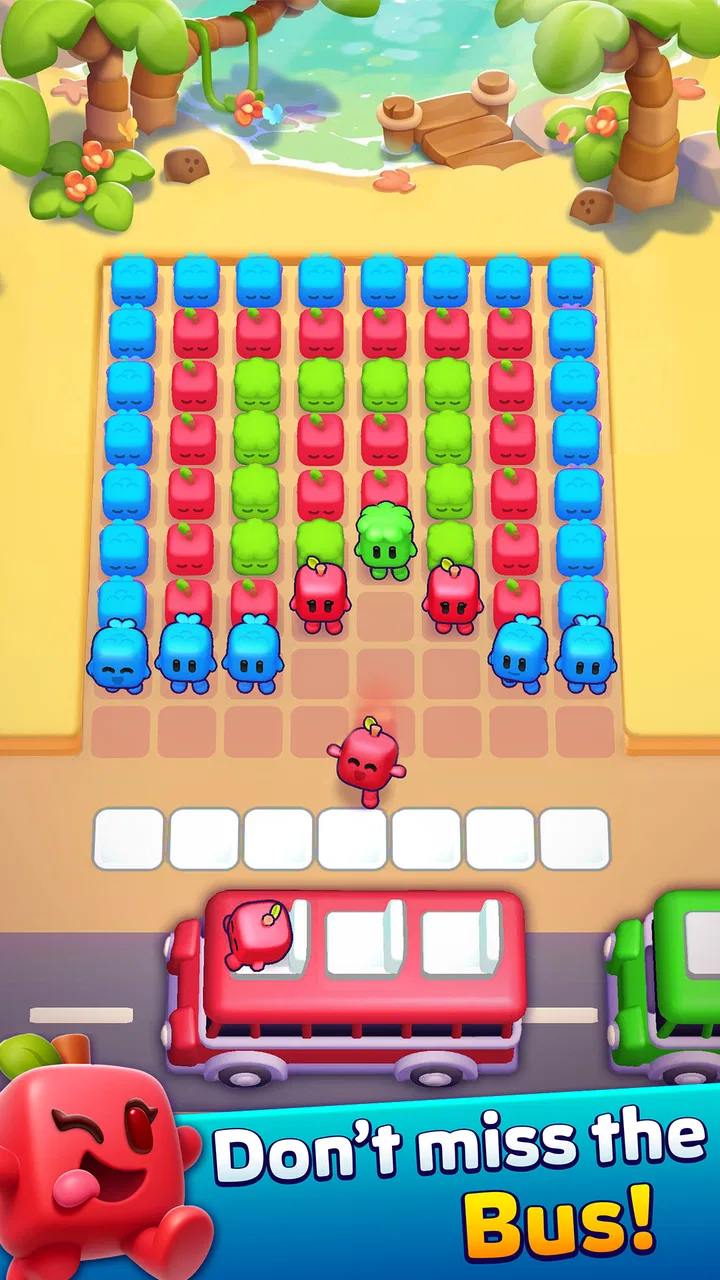
This is a color block puzzle in the broadest sense, but the three-dimensional presentation changes how I read each level. I am not simply scanning a flat grid for an obvious match. I have to pay attention to the placement of pieces, the visible paths, and the order in which I make moves. The cute characters soften the experience, yet the board can punish an impulsive tap when I have not considered what that move will leave behind.
For me, the most important decision criterion is the amount of concentration I want. The game is approachable enough for a casual session, but it is not completely mindless. I can play while waiting for an appointment, during a short commute, or between routine tasks, provided I am willing to give the board my full attention for a few minutes. If I need a game that can be played almost automatically while watching something else, this is not always the best fit.
The second criterion is tolerance for repetition. The central pleasure comes from recognizing patterns, clearing obstacles, and improving my next attempt. That loop is pleasant when I am in the mood for small, self-contained challenges. It is less appealing if I need a constantly changing adventure, a strong narrative, or a large strategic system that keeps expanding in different directions.
What the presentation adds to the puzzle
The block characters are more than a dry visual wrapper. Their expressions and colorful appearance make mistakes feel less severe than they would in a purely abstract board game. I found that useful because it encourages experimentation. A failed move feels like a prompt to rethink the sequence rather than a serious setback.
At the same time, the friendly style should not make you assume the game has no friction. Three-dimensional objects can require a second look, especially when several pieces use similar colors or sit close together. I sometimes had to pause before acting, not because the rule was unclear, but because I wanted to understand the whole arrangement. That is a small but meaningful difference from a simple match-three game where the next move is usually obvious.
Who will get the most from it
I would recommend it first to players who enjoy compact visual puzzles, gentle pressure, and a clear objective. It works particularly well for someone who wants a game that can be learned without reading a manual. Younger players may appreciate the bright characters and straightforward interaction, while adults can enjoy the pattern recognition and short-session format.
The age rating is Everyone, which matches the non-threatening presentation. I would still distinguish between being suitable for all ages and being equally interesting for every player. A child who likes arranging colors may stay engaged, while someone who wants fast action could lose interest quickly. Likewise, a puzzle fan who prefers wordplay, logic grids, or elaborate deduction may find this more lightweight than their usual choice.
It is also worth considering the device itself. The game requires Android 8.0 or later, so it is accessible on many older Android devices, but not on every handset still in use. On a small screen, the three-dimensional layout can feel more cramped than it does on a larger display. I found that screen clarity matters more here than it would in a minimalist number puzzle because recognizing the position of each block is part of the challenge.
Where it wins against ordinary puzzle alternatives
Compared with a traditional match-three game, this one feels less dependent on luck and more dependent on move order. I get more satisfaction from planning a clean sequence than from waiting for a fortunate cascade. That makes it a better choice when I want to feel responsible for the result rather than simply react to a changing board.
Compared with word puzzles, it removes the need for vocabulary and spelling. I can play it when I am tired or when I do not want to process instructions in detail. Compared with a large logic game, it is much easier to enter and leave. I do not need to remember a complicated rule set from a previous session before I can enjoy the next board.
Its audience size supports that accessible design. The game has passed ten million installs and carries an average rating of 4.5 from around forty-two thousand ratings, with about three thousand six hundred written reviews. Those figures do not guarantee that it will suit my personal taste, but they do reflect a broad appeal for this kind of colorful, casual puzzle.
Where a different category may be better
If I want a long-term strategy game, Block Jam is not my first choice. It gives me individual puzzle decisions rather than a larger world, character progression, or resource system. A dedicated strategy title would offer more depth, but it would also demand more time and attention. The trade-off is clear: this game is easier to pick up, while a deeper alternative may provide more lasting variety.
If I prefer calm, nearly meditative play, a non-timed sorting or coloring game may feel more comfortable. The visual style here is pleasant, but the need to think about the arrangement keeps me mentally active. Conversely, if I want a burst of reflex-based excitement, an arcade game will probably be more satisfying. The game’s appeal comes from choosing carefully, not from reacting at high speed.
Players who dislike free games with optional purchases should also think about their own boundaries before installing it. The game costs nothing to download, but its in-app purchase range runs from $0.99 to $209.99 per item. I do not treat the presence of purchases as an automatic reason to reject a game, yet I do consider it important to decide in advance whether I will spend anything. Anyone who wants a completely purchase-free experience may prefer a paid puzzle with a simpler commercial model.
What Playing It Feels Like in Everyday Use
I find this game easiest to assess through ordinary moments rather than an imagined marathon: a short pause, a quiet wait, or the urge to do something more active than scrolling. That perspective also brings out a practical distinction—when a quick board feels refreshing, and when I would rather choose a puzzle with a different pace or style.
A realistic short-session example
Imagine I have ten minutes before leaving for work. I open the game, solve a few compact boards, and stop without needing to reach a major story checkpoint. That is where it feels most natural. The game gives me a focused task, and the colorful blocks make the break feel lighter than a serious brain-training exercise.
Another useful situation is the end of the day, when I want something more engaging than scrolling but less demanding than a full console session. I can examine a board, try a sequence, and restart my thinking without committing to a long campaign. The important point is that the game works best when I treat each puzzle as a small mental reset, not as a title I must play for hours at a time.
I would be more cautious about using it in situations where my attention is divided. If I am listening closely to a conversation or moving through a busy place, a puzzle that depends on visual order is easy to play badly. I have learned that the fastest route is often to spend a moment looking before touching anything. That simple habit prevents the kind of careless move that makes a straightforward level feel unnecessarily awkward.
Three habits that improve the experience
My first useful habit is to inspect the full board before making the opening move. The most attractive color is not necessarily the best place to begin. I look for pieces that may restrict access to other blocks and try to identify which action opens the largest useful area. This turns the game from random tapping into a small exercise in sequencing.
My second tip is to avoid treating every available move as equally urgent. When several choices look valid, I prefer the one that preserves flexibility. A move that clears one color but leaves the remaining pieces tightly packed can be worse than a quieter move that keeps more options open. That is a subtle strength of the game: the board often rewards patience without requiring a complicated rulebook.
My third tip is to use a failed attempt as information rather than repeating it immediately. When I lose, I ask which earlier decision caused the later blockage. Was I too quick to clear a visible group? Did I ignore a piece that was limiting the layout? This approach makes retries feel purposeful and helps the puzzle layer develop beyond simple color recognition.
Small frustrations you should expect
The three-dimensional design can occasionally slow me down. When blocks overlap visually, I need to check their position instead of relying only on color. That is not necessarily a flaw, because spatial reading is part of the challenge, but it can feel less smooth than a flat puzzle. Players with poor visibility or who prefer very high-contrast interfaces may want to test the game briefly before committing to it as a daily favorite.
The other limitation is variety of purpose. The game is good at delivering a focused puzzle loop, but it is not trying to be a social platform, a story-driven adventure, or a creative construction tool. If I am already tired of short casual games that revolve around repeating similar actions, the attractive characters may not be enough to keep me playing.
There is also the normal tension of a free-to-play structure. Because the download is free, the sensible approach is to enjoy the core loop first and decide later whether any optional purchase is genuinely useful to me. I would not install it expecting every player to have the same relationship with its purchase options. Some people are comfortable spending occasionally; others will find the possibility distracting even if they never buy anything.
Keeping expectations realistic about performance and access
The current version is 3.12.0, and the game is available for Android users who meet the operating-system requirement. I see that as a practical advantage for people with compatible older devices, although the visual layout still benefits from a screen where colors and block positions are easy to distinguish.
I also recommend checking how the game fits your personal data and battery habits before making it a regular time filler, as I would with any mobile game. I do not need to turn every short puzzle into a permanent daily routine. The strongest use case is controlled, occasional play: open it when I want a visual challenge, close it when the break is over, and avoid forcing a longer session after the novelty has faded.
The cost of switching from another puzzle
Switching to this game is easy if my current favorite is a simple match-three title. I do not have to learn a complex fictional world or memorize many systems. The main adjustment is learning to read the board spatially and to think about order rather than only immediate matches. That learning curve is gentle, but it changes the rhythm enough to feel worthwhile.
Switching is less attractive if I already play a deep logic game that gives me carefully layered challenges, detailed explanations, or a strong sense of mastery. In that case, this may feel like a lighter companion rather than a replacement. I would keep the deeper game for deliberate sessions and use this one when I want a quicker visual puzzle.
The commercial switch is also straightforward because the download is free. The real cost is not the initial installation; it is the possibility of spending more than intended in a game designed for repeated short visits. My advice is simple: decide my spending limit before I begin, and judge the game by its free play first. That keeps the decision in my control instead of allowing a moment of frustration or enthusiasm to make it for me.
My recommendation for different players
I recommend Block Jam to anyone who wants a colorful, approachable puzzle for short breaks and enjoys thinking about placement and sequence. The cute block characters make it less austere than many logic games, while the three-dimensional boards give it more spatial interest than a basic color-matching pastime. It is especially suitable for players who value quick entry, simple rules, and the option to stop after a small number of challenges.
I would skip it if my priority is a rich narrative, competitive multiplayer, advanced strategy, or a completely purchase-free mobile experience. I would also look elsewhere if I want a puzzle that remains relaxing even when I am barely paying attention. In those cases, a different category will serve the need more directly rather than asking me to adapt to this game’s visual sequencing.
Overall, VOODOO has made a pleasant casual puzzle that understands the value of immediate clarity. My strongest recommendation is to play it deliberately: scan the board, preserve options, and do not confuse a bright presentation with a reason to rush. The game is free, rated Everyone, and has enough approachable charm to earn a place on a compatible Android device, but its best role is as a focused short-session companion rather than the only puzzle game I own.
My final verdict: choose it when you want friendly visuals wrapped around simple spatial decisions, and pass when you need deeper progression or a different kind of challenge. That distinction is what makes the game easy to recommend to the right friend without pretending it is designed for every type of player.
FAQs for Block Jam: 3D Color Puzzle
01What is Block Jam: 3D Color Puzzle and how is it played?
Block Jam: 3D Color Puzzle is a casual logic game built around arranging, matching, and clearing colorful three-dimensional blocks. Each level presents a compact puzzle board where you must think about color, position, and movement order before making a move. The controls are generally simple and touch-based, but later stages require more planning because one incorrect placement can block the remaining spaces.
02Is Block Jam: 3D Color Puzzle suitable for beginners?
Yes, the game is easy to understand for beginners because its core mechanics are introduced through straightforward early levels. You can usually learn by tapping, dragging, or rotating pieces and observing how the board reacts. However, it should not be considered completely effortless. As the puzzles become more complex, success depends on recognizing patterns, planning several moves ahead, and avoiding rushed decisions.
03Can Block Jam: 3D Color Puzzle be played offline?
Many puzzle levels can be enjoyed without a continuous internet connection, which makes Block Jam: 3D Color Puzzle convenient for short sessions while traveling or when mobile data is unavailable. Nevertheless, some features may still require connectivity, including advertisements, optional rewards, cloud synchronization, updates, or promotional content. It is best to open the game once online after installation so its available content can load correctly.
04Does Block Jam: 3D Color Puzzle contain advertisements or in-app purchases?
The game may include advertising, particularly between levels or when you choose to receive an extra hint, retry, or reward. Depending on the version available in your region, optional in-app purchases may also be offered for removing ads, obtaining boosters, or progressing more quickly. You should review the store listing and purchase settings before downloading, especially if children will be using the device.
05What devices are required to run Block Jam: 3D Color Puzzle smoothly?
Block Jam: 3D Color Puzzle is designed for modern Android and iOS smartphones and tablets, and its relatively simple puzzle format means it should work on many everyday devices. Performance can still vary according to the operating system version, available storage, memory, and graphics capability. Keep the app updated and leave sufficient free space, particularly if you experience slow loading, crashes, or delayed touch responses.
Pros
- Simple drag-and-sort controls are easy to learn.
- 3D visuals make block colors and positions easy to distinguish.
- Short levels are convenient for quick gaming sessions.
- Gradually harder puzzles provide a satisfying challenge.
- Offline play is useful when no internet connection is available.
Cons
- Later levels can feel repetitive once the core mechanic is mastered.
- Some puzzles may depend more on trial and error than planning.
- Frequent ads can interrupt the flow between completed levels.
- The 3D perspective may be confusing on smaller phone screens.
- Limited variation in objectives may reduce long-term replay value.

Block Jam: 3D Color Puzzle
Gallery